We do a lot at Apple Rubber. From designing to manufacturing seals and o-rings, we use our large collection of machines and processes to ensure the highest quality results every time for all custom molded needs. Between injection molding, vacuum compression, transfer presses, and elastomer selection, read on to find out how we do it.
Quality Seals, Quality Manufacturing
Compression molding is ideal for making high-strength parts with minimal material waste. It’s a great method of manufacturing simple rubber parts of intermediate precision that comes with the widest range of part sizes and the lowest lead times. Transfer molding is great for complex geometries and insert molding, and its benefits include design flexibility, short production cycles, and high cavity counts.
We also offer injection molding, which is great for the quick, high-volume production of intricate parts with tight tolerances. This highly versatile process creates products of varying shape, complexity, and size. Injection molding comes with lower scrap rates and material consumption, as well as repeatable cycles and improved sustainability.
Recent investments in advanced molding equipment allow us to maintain our position at the forefront of the industry. Vacuum compression and transfer presses ensure void-free molding for critical applications and provide superior surface finish and dimensional accuracy. Taken altogether, our high-precision and advanced molding techniques ensure the highest level of quality and precision in every component we produce.
Everything’s In-House
We’re known for our in-house mold making, which lets us develop top-quality parts. Our systems enable us to maintain strict quality control, offer greater flexibility in design modifications, and reduce lead times. We have a
CNC milling area to efficiently machine large components at fast speeds. The turning department transforms components from microminiature inserts to large mold plates. A grinding area ensures components are made with extreme accuracy. We also have equipment like drill presses and hydraulic presses to construct consistent quality molds.
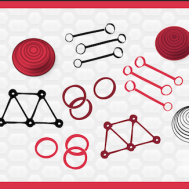
Popular molded shapes include grommets and poppets, both of which protect wires by sealing out vibration and contaminants. Composite seals combine materials such as elastomers and plastics to enhance performance in the complex environments of chemical processing, aerospace, oil, and gas. U-cup and lip seals perform well in hydraulic operations. Connector seals protect and ensure the integrity of electrical connectors in fluid systems.
Choosing the Right Elastomer
To ensure optimal seal performance, the correct elastomer must be selected. Each type has characteristics that make it ideal for different needs. Apple Rubber offers a wide selection of materials. Ethylene propylene diene monomer (EPDM) resists ozone and weathering and is ideal for water sealing; it’s typically used in water systems, outdoor equipment, and steam applications. Fluorocarbon (FKM) offers excellent chemical resistance and low outgassing (minimal trapped gas or fumes released at high temperatures) and is used in semiconductor manufacturing and aerospace.
Silicone (VMQ) is a popular elastomer for its resistance to extreme low and high temperatures, ranging from -85ºF (-65ºC) to 400ºF (204ºC). This range is a primary reason it’s found in medical devices, electronics, and food-processing equipment. Perfluoroelastomer (FFKM) has the highest chemical resistance among elastomers; it’s best suited for concentrated acids and ketones. Its properties make it well-suited for complex fields such as semiconductor manufacturing, pharmaceuticals, and chemical processing. Apple Rubber offers all of these elastomers and more, including fluorocarbon (FKM), nitrile (NBR), and fluorosilicone (FVMQ).
Selecting the right material for a custom molded shape yields many benefits. It ensures the seal functions as required under specific operating conditions; extends the lifespan of the sealing component; minimizes long-term costs by reducing maintenance and replacements; and ensures compliance with regulatory standards, as certain industries may require the use of specific materials.
Custom for You
If you have a sealing need, we have the custom molding capabilities to help you out.