Why UL Matters in Elastomer Selection
UL recognition plays a critical role in elastomer selection for electrical, industrial, and enclosure applications—not because it guarantees performance in every use case, but because it establishes verified, repeatable benchmarks for safety, durability, and long-term behavior. UL evaluations are performed on specific material formulations and defined constructions, providing documented evidence that a compound performs consistently under prescribed conditions.
For customers, this matters because elastomers are rarely the primary focus of certification efforts—yet they frequently determine whether a system passes or fails. Gaskets and seals directly influence environmental protection, thermal stability, and fire or electrical safety performance. Using UL-recognized elastomer compounds reduces uncertainty during product certification and helps avoid late-stage redesigns driven by material performance gaps.
UL recognition also brings traceability and formulation control, including evaluation of material durability, aging, and compression behavior consistent with standards such as UL 157. When a compound carries a UL file, it indicates that the formulation has been evaluated as a controlled material, not simply a generic polymer type. This consistency supports regulatory confidence, supplier accountability, and long-term product continuity.
A Spectrum of UL-Recognized Elastomer Solutions
No single elastomer performs optimally across all environments. Temperature extremes, fluid exposure, outdoor aging, and mechanical stress each drive different material requirements. To address this reality, our UL-recognized compound portfolio spans multiple elastomer chemistries, allowing material selection to be aligned with actual service conditions rather than over- or under-specifying a single solution.
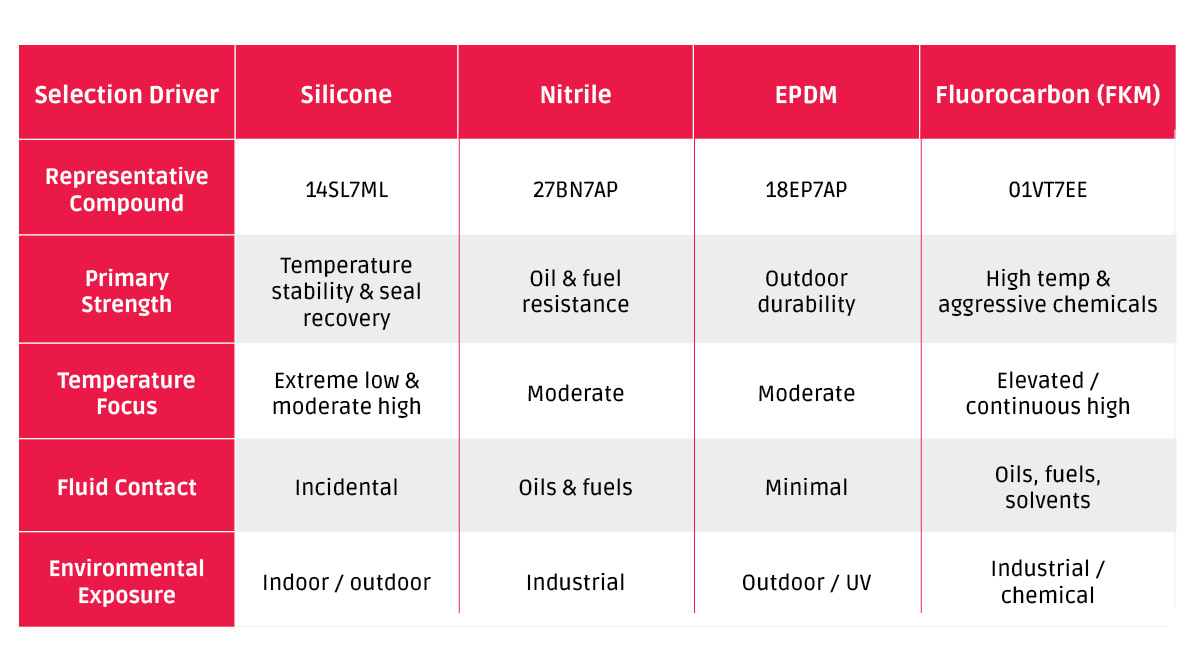
• Silicone compounds address applications where temperature extremes and long-term sealing recovery are critical. Their stability at low and elevated temperatures supports reliable performance in thermally demanding environments.
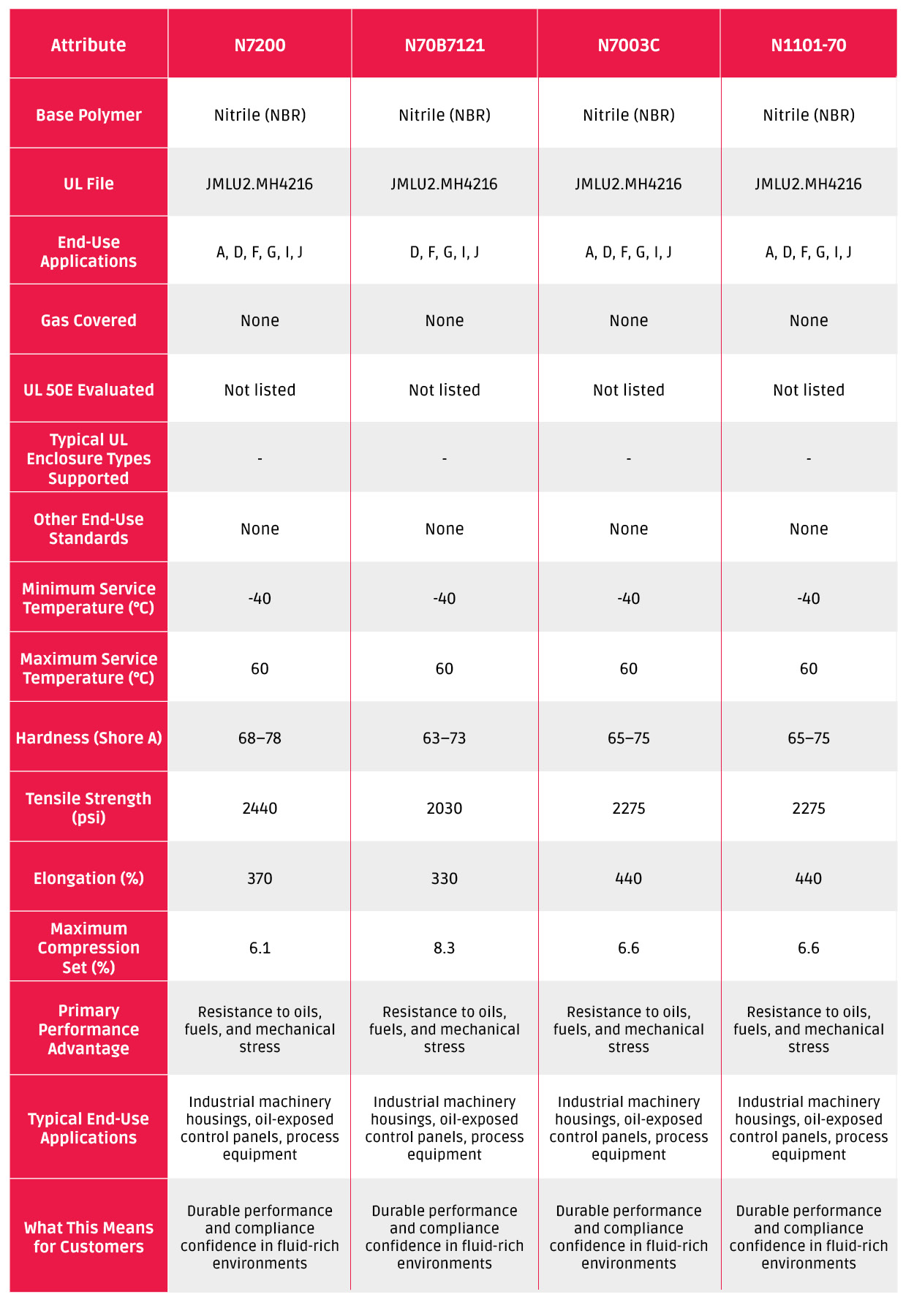
• Nitrile compounds are selected where oils, fuels, and industrial fluids are present. Their balance of mechanical strength and chemical resistance supports durability in machinery and process-driven applications.
• EPDM compounds are well suited for outdoor exposure, resisting ozone, UV radiation, and weathering. These materials support long-term environmental durability where sunlight and moisture are primary stressors.
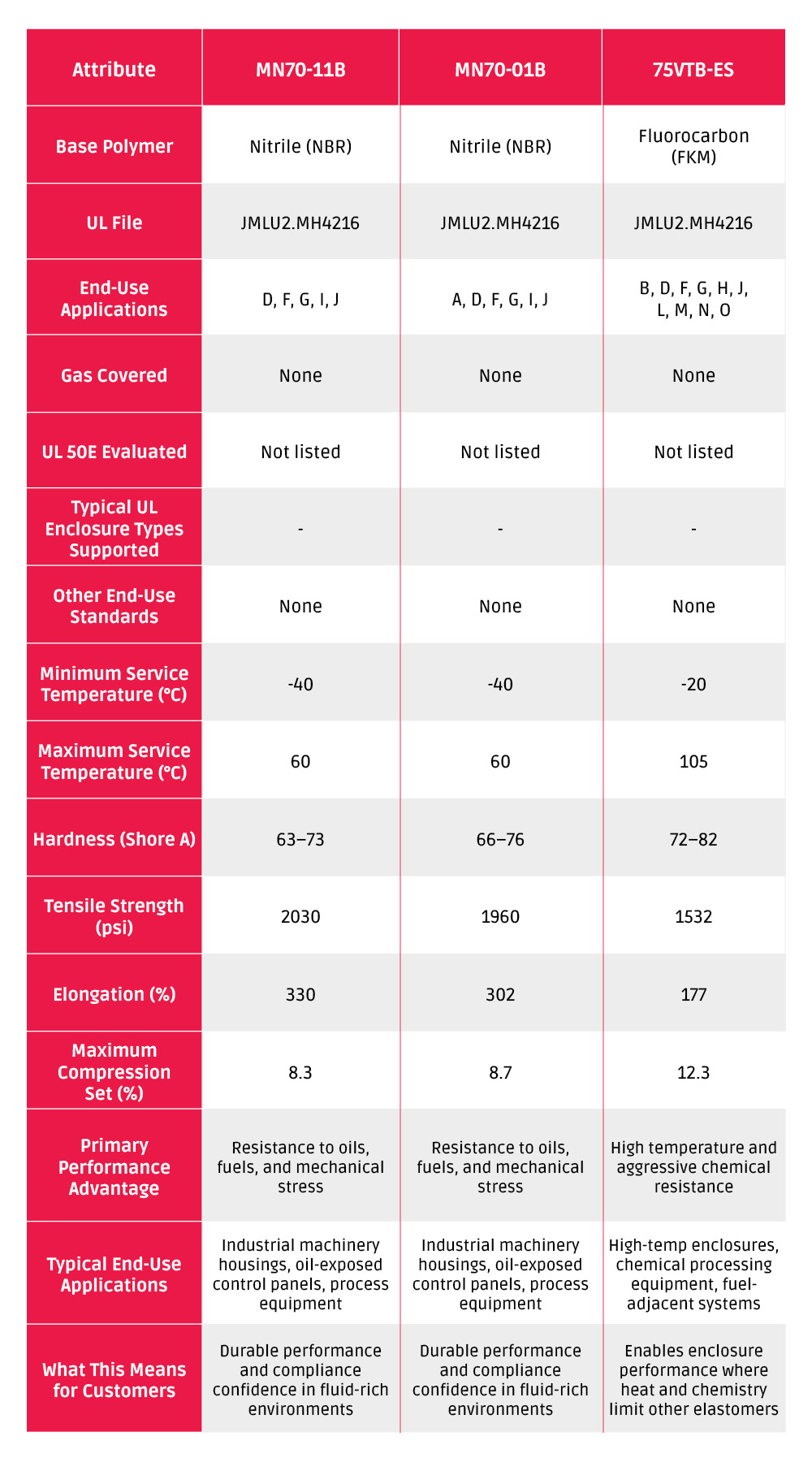
• Fluorocarbon compounds extend performance into high-temperature and chemically aggressive environments. Their resistance to fuels, oils, and solvents supports applications where other elastomers may experience accelerated degradation.
What This Means for Customers
This portfolio approach allows customers to select elastomer materials based on real-world operating conditions, while maintaining the assurance that each option has been evaluated within the UL framework. The result is improved confidence during product approvals, reduced certification risk, and greater long-term reliability in the field.
Rather than forcing a single material to meet every requirement, this spectrum of UL-recognized compounds supports informed material selection—aligning performance, compliance, and durability without unnecessary compromise.
UL-Recognized Elastomer Materials Portfolio
This technical brief presents a portfolio of UL-recognized elastomer compounds designed to support diverse operating environments across electrical, industrial, and enclosure applications. UL recognition establishes a framework for material consistency, traceability, and documented performance, helping reduce certification risk while supporting long-term reliability.
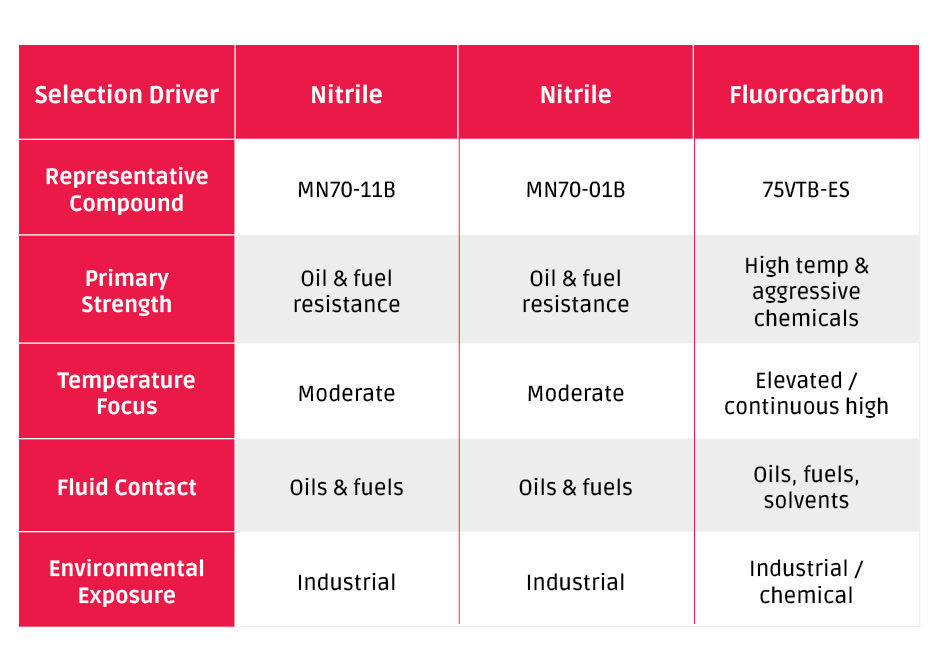
Material Selection by Operating Conditions
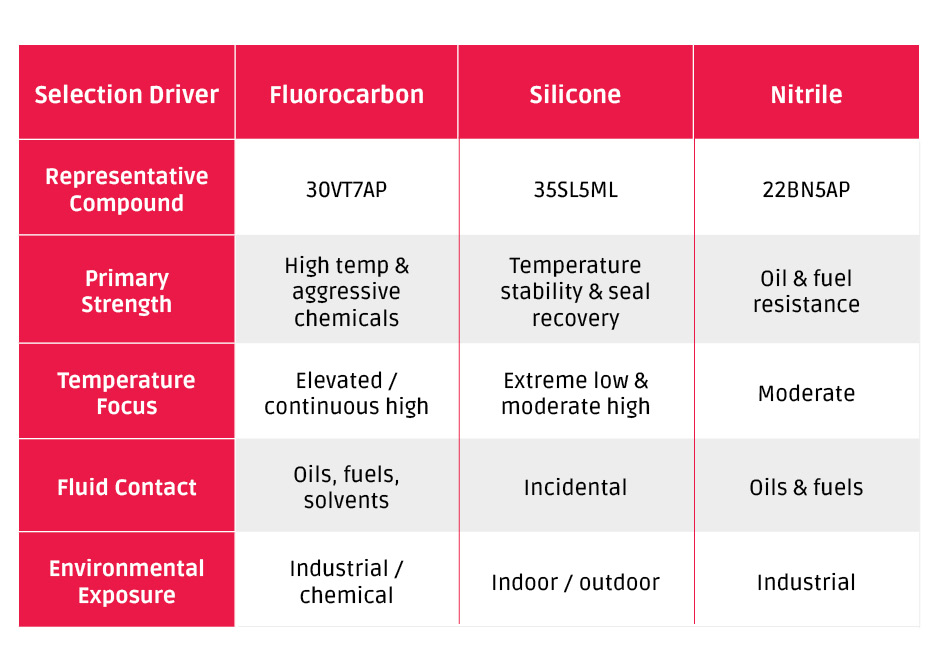
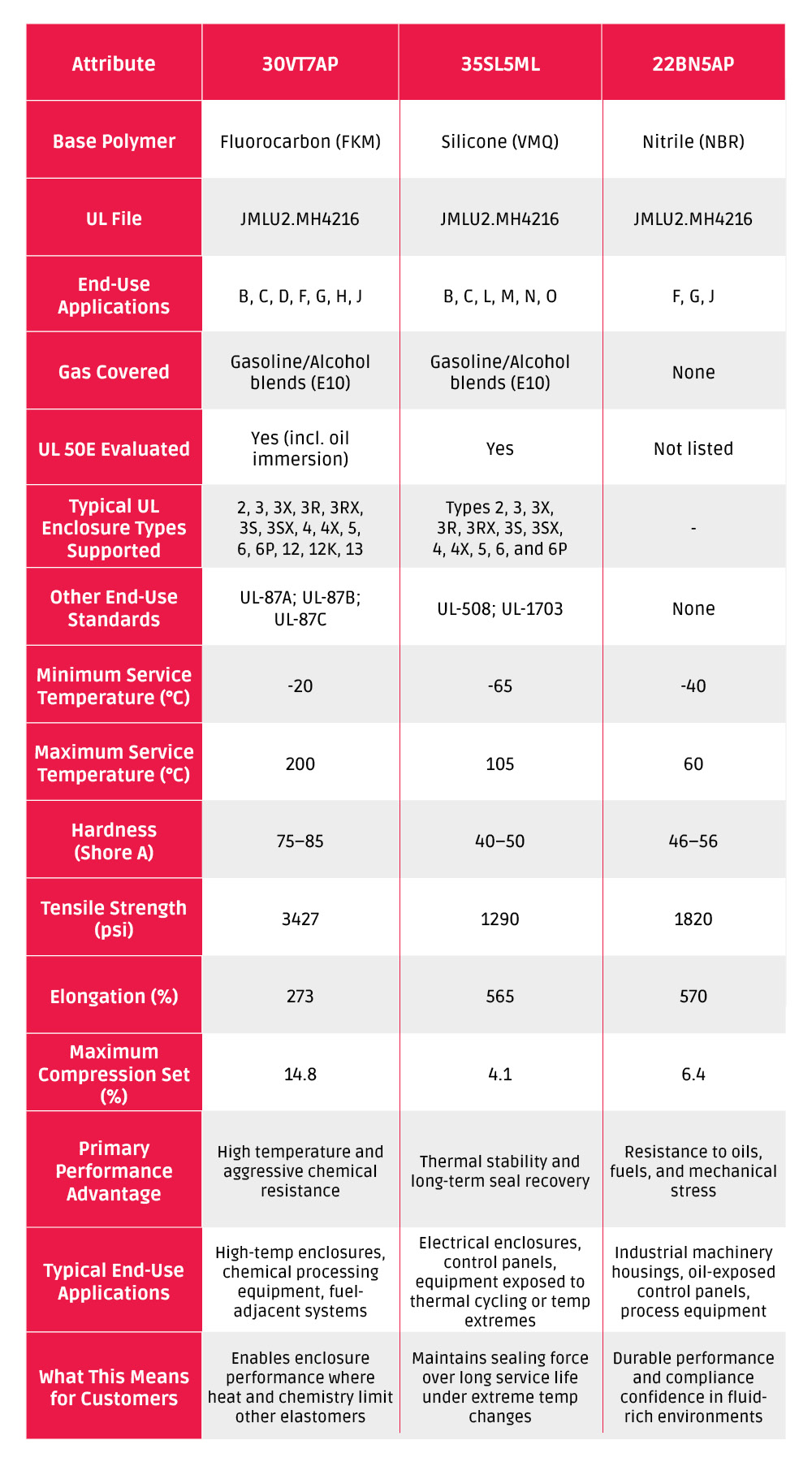
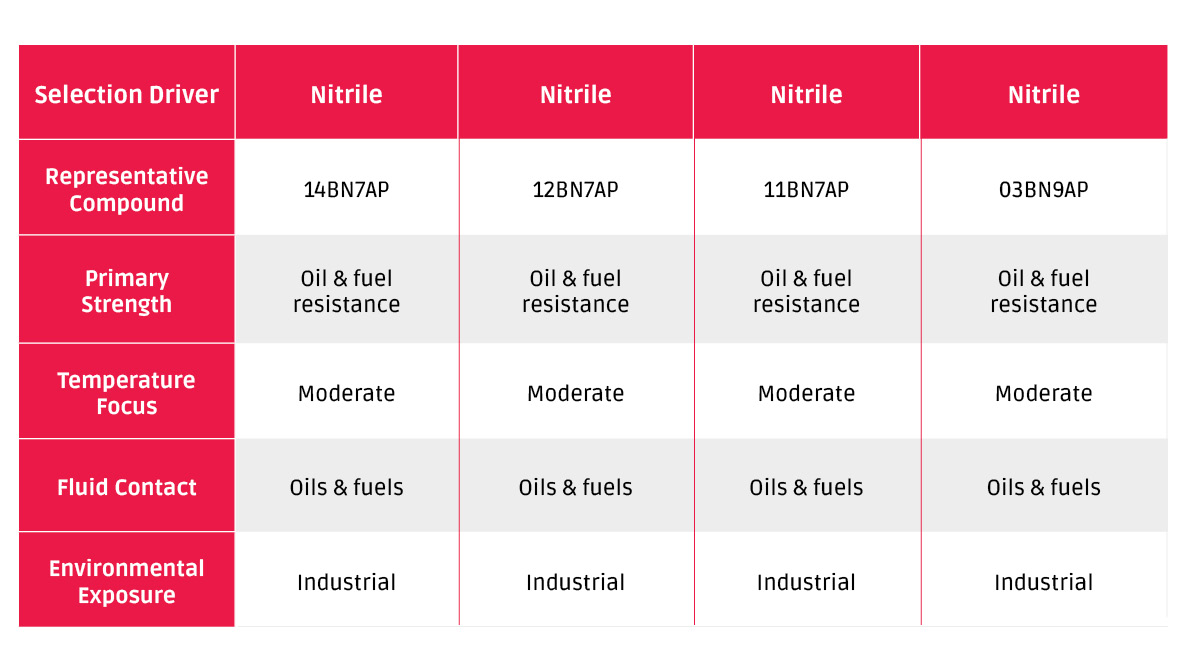
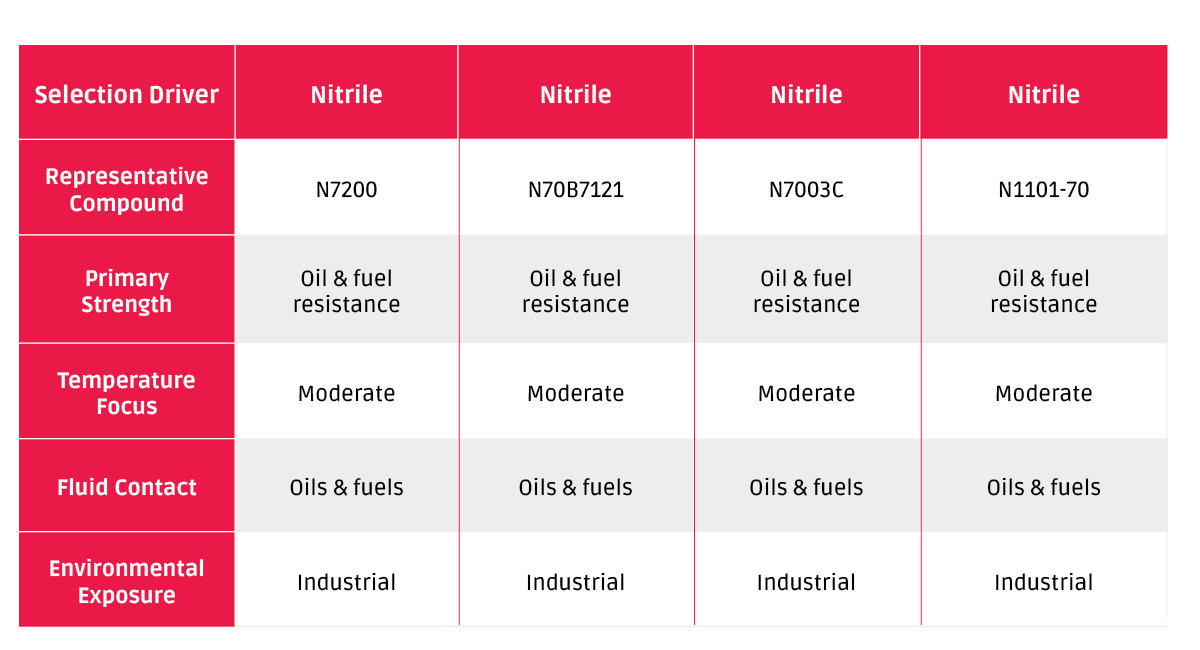
Use the selector below to identify the appropriate material family based on dominant service stresses; start with the dominant stress: temperature, fluid contact, or environment. Identify the matching material family using the selector above.
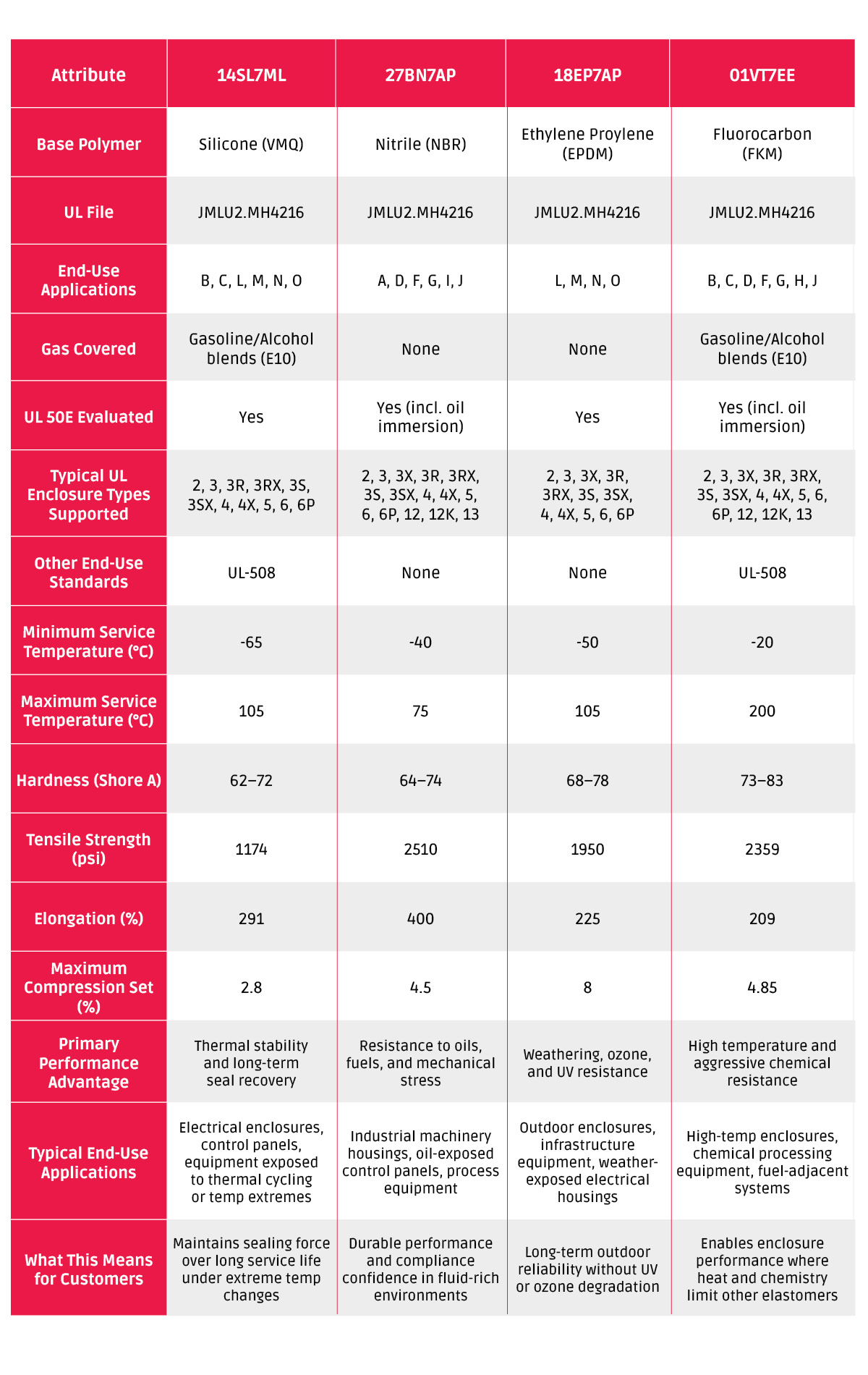
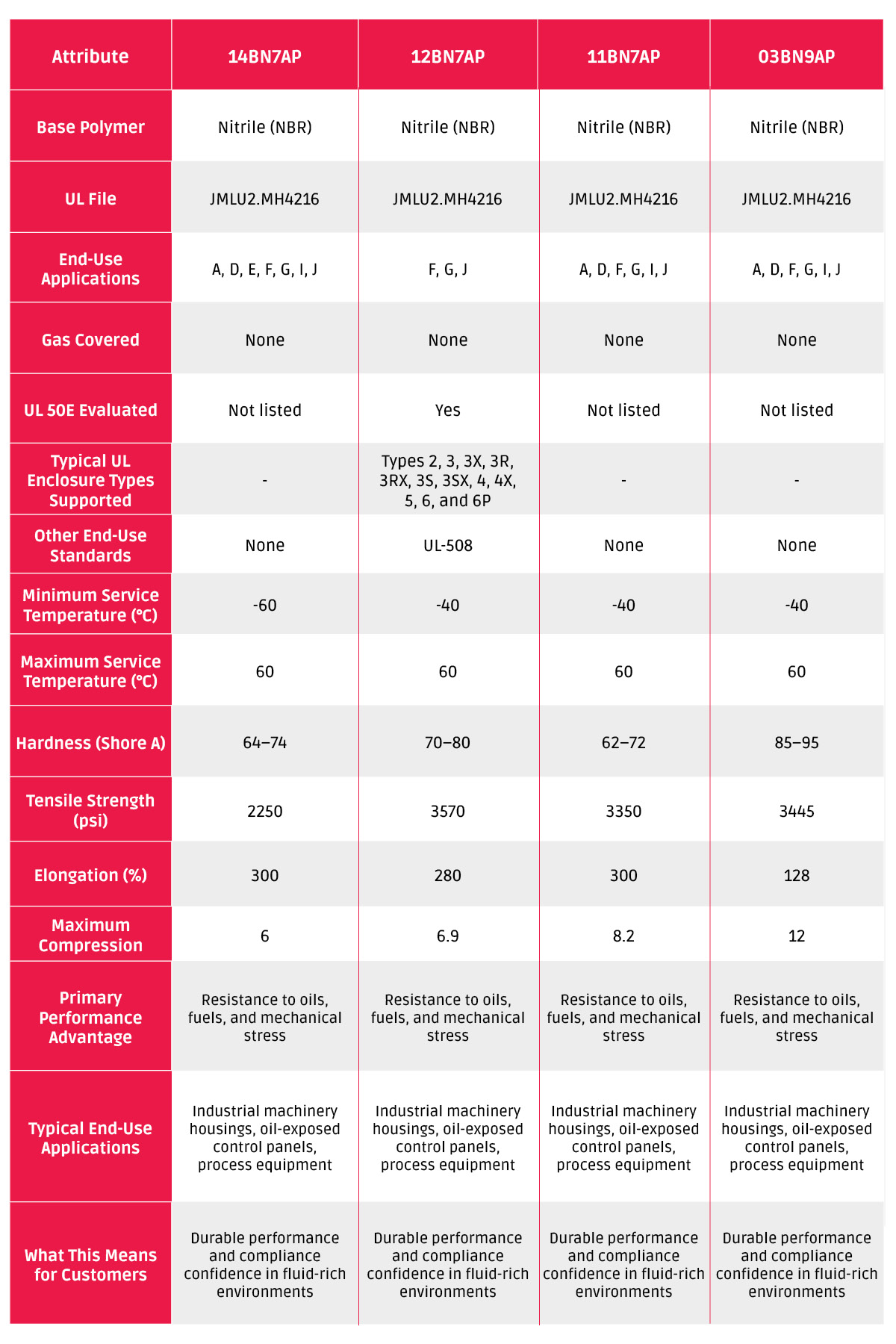
Confirm performance in the comparison table by reviewing service temperature, hardness, compression set, and mechanical properties.
Detailed material properties are provided in the comparison tables that follow.
Click on each table for a closer look at them.
UL Glossary and Reference Terms
UL (Underwriters Laboratories): An independent safety science organization that evaluates materials, components, and products against defined safety and performance standards. UL evaluation provides documented, repeatable benchmarks but does not guarantee suitability for all applications.
UL Recognition (Recognized Component): A designation indicating that a material or component has been evaluated by UL for use within an end product or system. UL recognition applies only when the material is used as defined in the UL file and does not constitute approval of a finished product.
UL Listing (Listed Product): A designation applied to complete end products that have been evaluated and certified by UL to meet applicable standards. Elastomer compounds are typically UL Recognized components rather than UL Listed products.
UL File Number: A unique identifier assigned by UL that links a material to its evaluation record. The UL file documents formulation control, applicable standards, and approved conditions of use. Changes to formulation or processing may invalidate recognition.
Formulation-Controlled Material: An elastomer compound evaluated by UL as a specific formulation rather than a generic polymer type. This ensures consistency, traceability, and repeatability across production lots.
UL 50E: A UL standard that evaluates the environmental performance of electrical enclosures for indoor and outdoor use. For elastomers, UL 50E relevance is tied to gasket and seal performance within an enclosure system, including resistance to water ingress, dust, aging, and environmental exposure.
UL 157: A UL material standard addressing the performance of gasket and sealing materials under conditions of aging and sustained compression. Evaluation under UL 157 supports assessment of material stability and suitability for use in electrical equipment, but does not certify enclosure performance.
UL 508: A UL standard covering industrial control equipment. When referenced for elastomers, it indicates suitability for use in control panels or equipment where thermal stability and material integrity are required under electrical operating conditions.
End-Use Applications (UL Categories): Lettered application designations defined within UL material files that specify approved use environments and exposure conditions. These categories help determine where a material may be applied within UL-evaluated systems.
Environmental Sealing: The ability of a gasket or seal to maintain protection against ingress of water, dust, or contaminants when installed within an enclosure system. Environmental sealing performance is evaluated at the system level, not the material alone.
Compression Set: A measure of an elastomer’s ability to recover after prolonged compression. Lower compression set values indicate better long-term sealing force retention.
Service Temperature Range: The temperature limits within which an elastomer is expected to perform reliably under continuous use. These values support material selection but must be considered alongside environmental and mechanical conditions.
Oil Immersion: A condition under which elastomer performance is evaluated while exposed to oils or fuels, indicating suitability for fluid-exposed industrial environments.
*Note: It is important to understand UL recognition supports material selection by providing documented performance benchmarks and formulation control. While UL does not certify elastomers for all possible applications, it establishes a reliable framework for evaluating consistency, durability, and suitability within regulated systems.