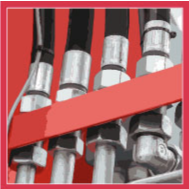
Hydraulic systems need o-rings to function properly. It’s as simple as that. Without o-rings, these complex pieces of machinery and equipment would fail because of high temperature, pressure, or many other factors. Read on to find out more about hydraulic systems, how o-rings impact them, and the materials to consider when selecting an o-ring.
What Are Hydraulic Systems?
They are setups that use pressurized fluids like oil and convert them into energy to move heavy loads or effectively run machinery. Common examples of these systems include hydraulic presses and pumps, portable car jacks, and excavators. These types of systems are used in diverse industries like manufacturing, construction, transportation, aviation, and agriculture.
How O-Rings Impact Hydraulics
The relationship between o-rings and hydraulic systems is incredibly important since they’re vital to their operations and performance. O-rings stop leaks from occurring in equipment from liquids like hydraulic oil. Since even the smallest leak can lead to large-scale issues, it’s important for the o-rings to serve as this barrier.
Aside from leaks, o-rings also prevent contaminants from entering systems. Dust and dirt can wreak havoc on machine efficiency, so o-rings block these contaminants from interfering with hydraulic operations. These systems can give off massive amounts of vibrations. Over time, this can lead to misalignment of pumps, metal cracking, and eventual degradation. O-rings act as dampeners by absorbing the vibrations through their viscoelasticity, storing and dissipating energy from vibrations into heat.
Factors That Influence O-Rings in Hydraulics
Fluid compatibility, operating temperature ranges, pressure tolerance, and o-ring friction all need to be considered. Improper combinations of rubber and fluids like oil and water can cause swelling or premature failure. Additives can also impact seals; for example, amines (chemicals used to prevent mechanical degradation) and preservatives in hydraulic oils can attack the polymer backbone of FKM seals, forcing failure by causing the seal to lose its stretch and flexibility.
Low temperatures can adversely affect sealing ability. Physically, the seal can shrink and create gaps where liquids like oil can leak out, and o-rings can become hard and lose their elasticity. This can cause flattening, where the o-ring sets into another shape and doesn’t seal again, even at increased temperatures. O-rings that become stiff from cold cannot quickly adjust to shifts in system pressure. High temperatures harden elastomers, causing the o-ring to degrade and become brittle, eventually falling apart. These broken elastomer parts can even end up in the hydraulic system, causing contamination.
Pressure tolerance is the amount of force a material can withstand before it breaks or leaks. Seals are exposed to high levels of pressure in hydraulic applications. Without the proper elastomer, seals can become overstressed and fail, posing an extreme danger to hydraulic systems and those using them. Since o-rings don’t have fixed pounds-per-square-inch (PSI) ratings, their pressure tolerance depends on factors like temperature and durometer (hardness). Excessive o-ring friction can cause swelling, heat buildup, and wear. Ensuring the gland width is sufficient to allow space for the o-ring volume, as well as using lubricants compatible with system components, are two effective ways to reduce friction.
Compression set, which is the amount by which an elastomeric material fails to return to its original size, is also important. When high, it means rubber won’t return to its original shape after being compressed; low means the rubber does revert to its previous shape. Low is necessary as it ensures the seal rebounds to keep constant outward force and prevent leaks. High runs the risk of losing sealing force via lowered contact pressure and may turn stiff, leading to permanent flattening and eventual hydraulic system failure.
Selecting the Right Sealing Material for Hydraulics
Common o-ring types for hydraulic applications include nitrile, neoprene, ethylene propylene diene monomer (EPDM), fluorocarbon (FKM), and polyurethane. Nitrile has excellent resistance to petroleum-based fuels and oils, water, and hydraulic fluids, and can withstand temperatures from -40°F to 257°F (-40ºC to 125ºC). Neoprene has superb physical toughness and resistance to petroleum oils and ozone, operating between -40°F and 250°F (-40ºC to 121ºC), and is ideal for refrigeration units in air conditioning systems.
EPDM is good between -76°F and 275°F (-60ºC to 135ºC), with resistance to ozone and chemicals, making it ideal for outdoor use; FKM is strong between -13°F and 446°F (25ºC to 230ºC), and is good in aircraft fuel systems and chemical-based environments; and polyurethane operates between -25°F and 300°F (32ºC to 149ºC), and works well in hydraulic cylinders and valves. Our material selection guide and o-ring gland calculator can help you find the best type of seal for your hydraulic applications.
Any Hot Questions?
Our Apple Rubber team is happy to answer any questions you may have.