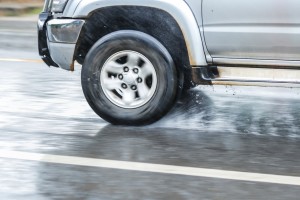
Friction is the resistance to motion between two surfaces. It can depend on load, speed, temperature, surface finish, materials, and environment. Typically, friction is reported as static or dynamic. Static friction is the friction when the first load to move the object is applied to the surfaces, or breakaway friction. Dynamic is the value of friction when a constant load is applied to the surfaces.
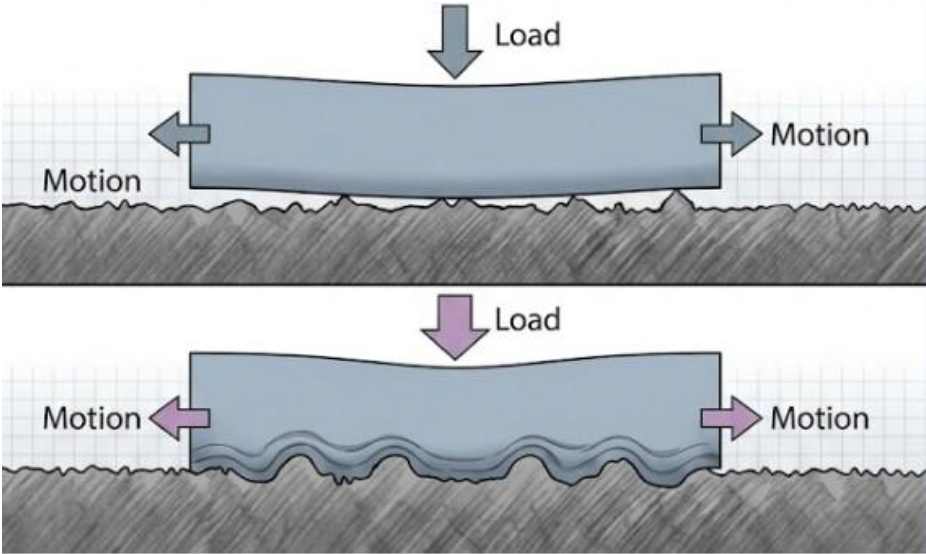
If a surface is magnified, it will show peaks and valleys. Friction is how the peaks and valleys of one surface interlock with the peaks and valleys of the joining surface. Metal or hard plastics don’t deform as much into the mating surface, so friction can be lower. Rubber is typically chosen for its deformability, as in the case of an O-ring groove that seals liquids. As the rubber deforms into the peaks and valleys, friction increases, or the force needed to move the materials increases.
Image 1: Differences of deformation of harder to softer rubber over a surface.
A durometer is the measurement of the hardness of rubber. More information on durometers can be found in our previous Hot Topic, “Measuring Durometer Shore.” Sealing compounds are in the range of 20 to 80 Shore A. Durometer can also be considered as how much a material will deform. Lower durometers allow the durometer gauge pin to deform, showing a lower reading. This deformation will then allow the material to deform in the surface imperfections, resulting in higher friction.
Below is a graph showing various formulations of fluoroelastomer (FKM) rubber. With FKM formulation, to increase or decrease hardness, carbon black is added or subtracted. We picked FKM to make it easy to change hardness and not affect friction by other factors like plasticizers level or various filler changes. Compound formulations can affect friction by causing materials to bloom to the surface and act like surface lubrications. Different filler types can also create different metrics on the surface of the rubber, changing the friction.
Table 1: Friction of FKM at difference durometers.
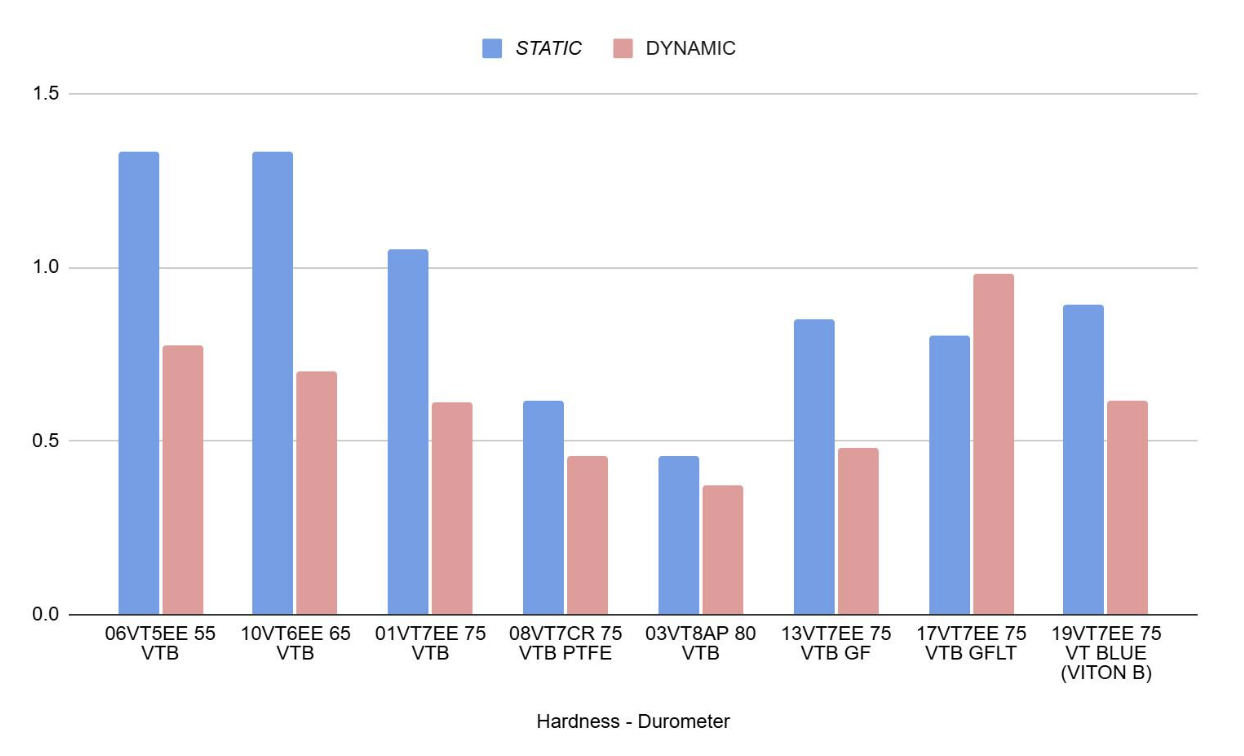
As shown, lower friction results in both higher static and dynamic friction. One example shown is the introduction of blending Teflon™ (PTFE) in the rubber. More research needs to be done to show why the difference in polymer types like “GF” or “GFLT” has an effect on friction. One theory is that higher modulus values due to the different curing methods help reduce deformation at the surface.
The idea of using a polished finish to help reduce peaks and valleys will actually cause higher friction. We find that with the higher contact surface finish, we have seen customers actually increase the friction. There is a trade-off with surface finish and durometer to get the correct friction. We have used textured tools to help friction to make parts easier to install with automated assembly equipment and also decrease insertion forces.
Our design engineers use many ways to improve friction for our customers. Through polymer type or rubber formulation design, we can improve friction. In our tooling, we can modify the cavity surface to change the surface finish of the rubber seal to change the friction. Or if an additional reduction is needed, special coatings can be applied. Contact Apple Rubber to let one of our Design Engineers help you with your friction issues.