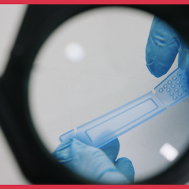
Apple Rubber is synonymous with quality, and it starts with advanced testing. We have a dedicated laboratory that offers one of the most stringent quality assurance programs in the rubber industry. Our technology ensures optimal results that satisfy our customers. How do we do it all? Read on to find out.
Why Does Advanced Testing Matter?
Seals and o-rings are used in many critical applications across various industries, such as the medical, aerospace, and defense fields. Normal testing covers aspects of physical properties like Shore testing (to measure rubber’s hardness), quality control, and ensuring the correct material composition is used. This is more for day-to-day, batch-to-batch production.
Advanced testing is much different. It goes beyond physical properties and analyzes how rubber behaves under factors similar to what it would experience in the real world, such as stress and temperature. This testing includes high-level and analytical qualities, like chemical compatibility and resistance, interactions with polymers and fillers to forecast how well a rubber may perform, and identifying potential internal faults within the rubber.
Step Into the AppleLab®
Our in-house AppleLab® Advanced Testing Laboratory is where the magic happens. It highlights our commitment to creating and maintaining the highest level of product quality and customer satisfaction. We offer the Production Part Approval Process (PPAP) to ensure suppliers understand engineering design specifications and can consistently produce parts that meet those requirements; Process Performance Qualification (PPQ) to verify that manufacturing processes can reliably produce high-quality products under normal conditions; and provide statistical data to fulfill quality control standards.
Through our AppleLab, we conduct various tests on seals to ensure they are ready for use. These tests include evaluating elongation, tensile strength, swell, and assessing a seal’s stiffness and resistance to elasticity under stress or pressure. We also utilize ASTM testing methods (formally the American Society for Testing and Materials, now ASTM International) that adhere to specific ASTM standards. These include ASTM D2240 for durometer hardness; ASTM D395 for compression set tests on rubber products; and ASTM D1414 for comprehensive testing of o-rings.
The Technology We Use
Advanced testing demands advanced technology. That’s why we employ state-of-the-art equipment to ensure our custom testing procedures deliver optimal results. The Micro-Vu Vision Measuring System uses cutting-edge video, optical, and imaging processing technologies to measure parts accurately without distortion. This system is suitable for microminiature parts, like our MicrOrings®, and provides precise statistical process control data.
Our Fourier Transform Infrared Spectrophotometer (FTIR) analyzes the chemical composition of rubber compounds before and after molding to confirm consistency across different batches and shipments. The Thermogravimetric Analyzer (TGA) offers unmatched accuracy in material analysis by determining chemical content and thermal stability at temperatures up to 1,832ºF (1,000ºC).
This Will Be on the Test
If you have any questions about our testing lab, reach out to our engineers!