
Rubber parts are packaged using the best standards for commercial packaging, unless otherwise directed by the customer. The goal is to prevent damage, contamination, or degradation during storage, handling, and shipping. This is generally achieved by placing a specific bulk quantity of the parts into an air-filled polyethylene bag, heat sealing it, placing a label onto one side, and then loading it into a corrugated cardboard box.
Here is more detailed information on the individual pieces constituting a shipment:
Polyethylene Bags
Standard packaging:
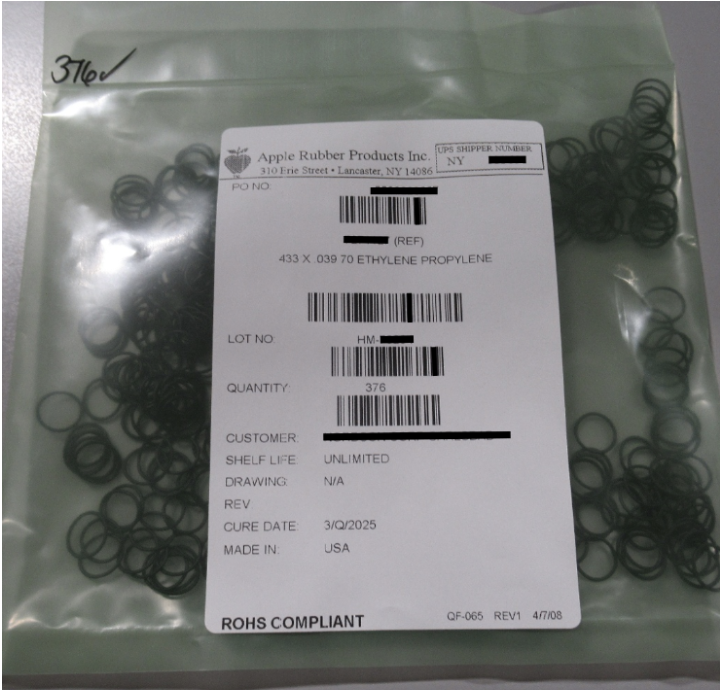
- General rubber parts: Green polyethylene bag, 4 mil thickness, heat-sealed, bulk quantity
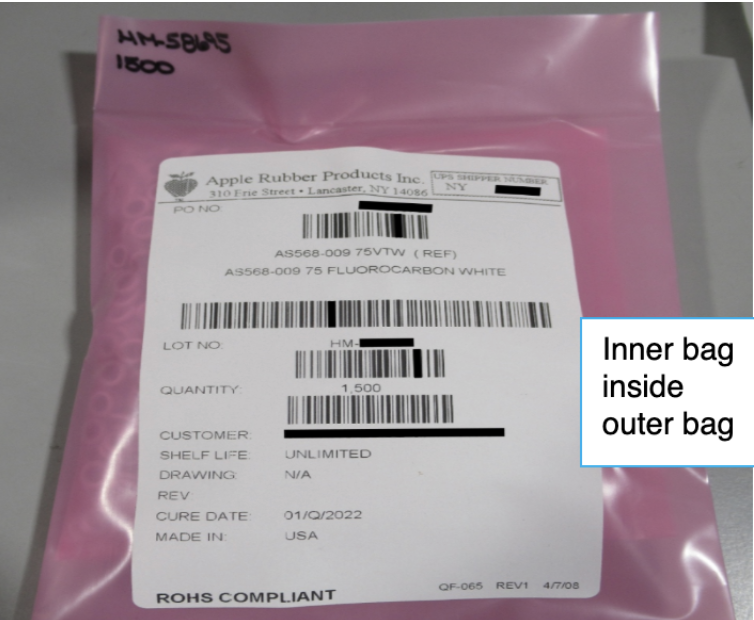
- Medical parts: Pink polyethylene bag, 4 mil thickness, heat-sealed, double-bagged, bulk quantity
An example of both general and medical parts in their respective bags can be found below.
Specialized options:
- MIL-PRF-121G Type 1 kraft paper/polyethylene bags
- Individual packaging to AMS 2817E
- Black, clear, or other color polyethylene bags
- Resealable polyethylene bags
Shipping Packages
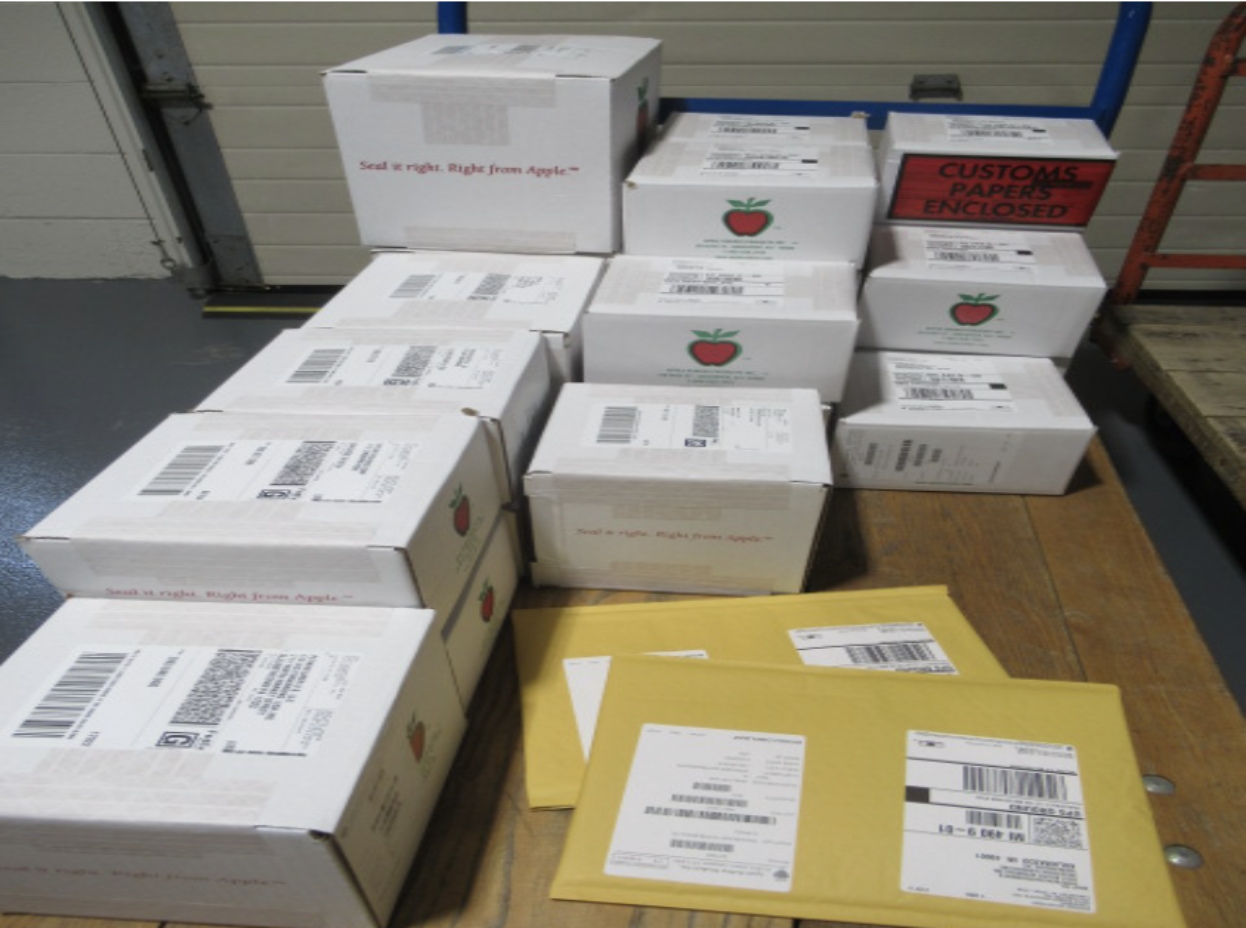
Depending on the requirement or quantities of parts being shipped, there are a few standard options for packaging.
Standard packaging:
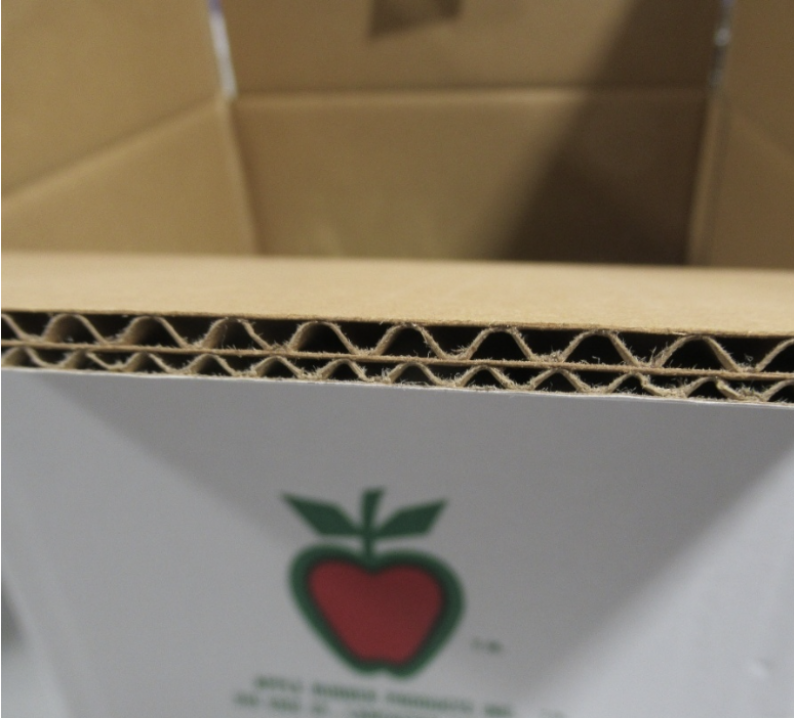
- White exterior-color double-wall corrugated cardboard box meeting 275 lb./sq. in. burst-strength test
- Gold-colored self-sealing bubble mailer envelope
- UPS® Express Letter envelope or FedEx® Overnight envelope
Specialized options:
- Brown-colored single-wall corrugated cardboard box meeting 200 lb./sq. in. burst-strength test
- Cardboard inserts to divide the packaging in sections
The standard tape used to seal the boxes is water-activated reinforced kraft tape. Custom box sealing can involve standard, custom, and serialized options, including tamper-evident or security-style tape or labels.
Package Labels
Standard labels are 4-inch x 6-inch thermal labels that include product information. Labels are placed on the outside of the shipping container and on each bag within the container. For international shipments, customs paperwork is inserted into an envelope placed on the exterior of the package. Additionally, Transportation Envelopes can be attached to the outside of the package to include desired paperwork.
Standard shipping labels will include:
- Shipping number
- Purchase Order number
- Item number and description
- Lot number
- The 5- or 6-digit code is an Apple Rubber-generated number given to differentiate different manufacturing batches. Lot numbers are sequential.
- Item quantity
- Customer name
- Shelf life
- More information on shelf life can be found here: applerubber.com/hot-topics-for-engineers/comparing-elastomer-storage-standards-sae-as5316-and-iso-2230
- Item drawing revision
- Cure date
- This will be the calendar quarter and year in which the item was molded and cured
- Made in location
- ROHS compliance (if applicable)
For medical parts that are double-bagged, the inner bag typically contains the same information as the outer bag, except the inner bag does not list the Purchase Order number.
Shipping Documentation
Every shipment includes a packing slip that contains detailed information about the contents of the package. This level of documentation provides full lot traceability and satisfies the requirements set forth in ISO 9001 and AS9100 standards. If more rigorous documentation is required, specialized options include Certificate of Conformance (CofC), Certificate of Analysis (CofA), bespoke data forms, or Bill of Lading.
An example packing slip can be found here: Packing Slip Example.pdf
Examples of other quality documents can be found here: Quality Documentation.